
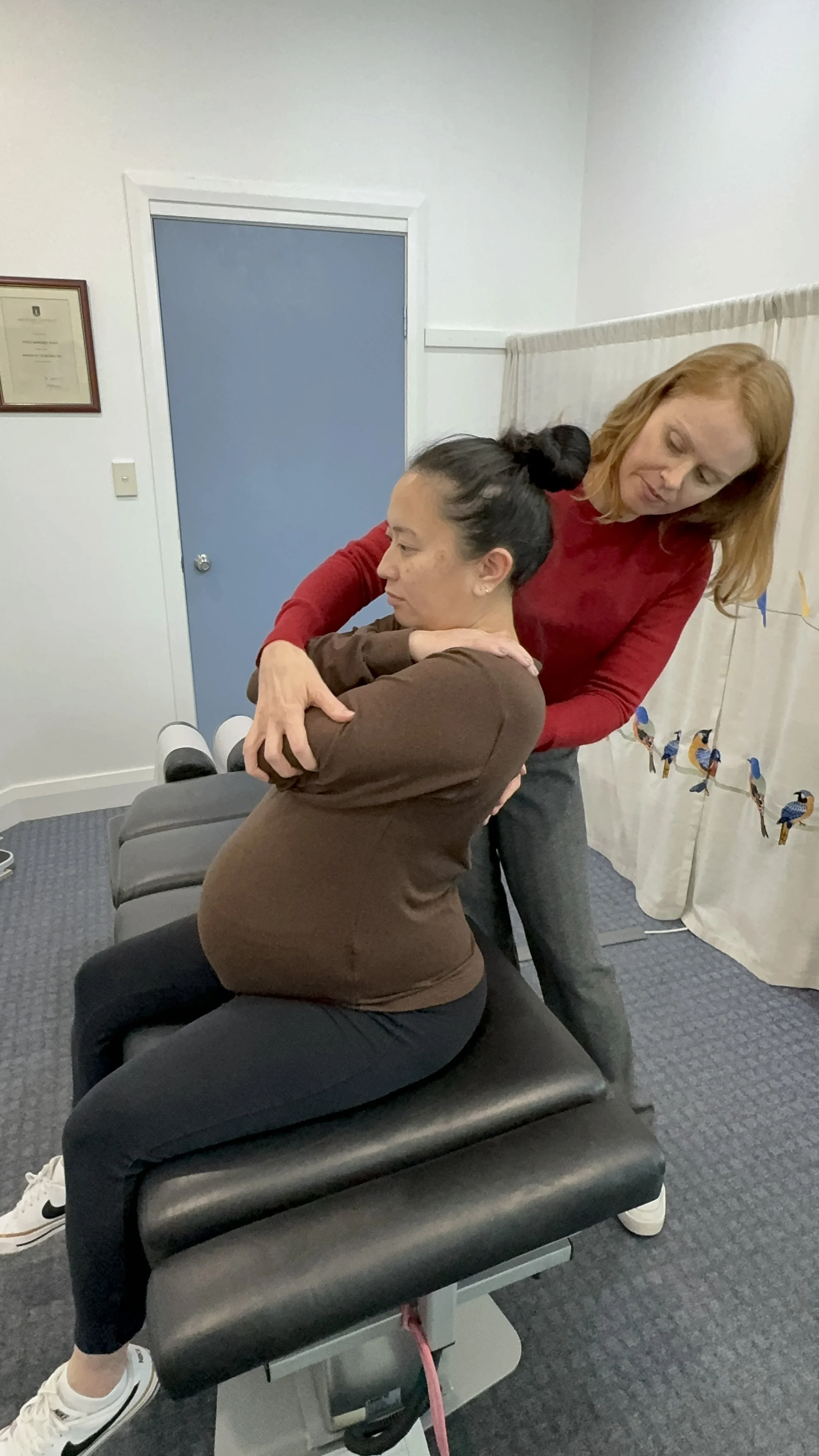
Ribs feeling tight or uncomfortable during pregnancy?
/Does it feel like your baby has stuck their foot under your ribs permanently? Meanwhile, around the back, everything feels tight or “jammed”—and finding a comfortable way to sit is becoming a daily challenge.
Perhaps you keep shifting in your chair at work. Doing the washing or preparing dinner feels harder than it used to. Even settling on the sofa at the end of the day takes a few attempts.
If that sounds familiar, you deserve to have your discomfort heard and assessed, rather than simply being told to put up with it until your baby arrives.
When your back feels “jammed”
“Jammed” can be a useful way to describe how an area feels. It doesn’t, on its own, tell us what is causing the discomfort or mean that a rib is out of place.
Back pain is common during pregnancy. Changes to the ligaments can place additional strain on the lower back and pelvis.
Rather than assuming your baby’s position is the whole explanation, it helps to look at the details: where you feel the pain, when it started, what makes it worse, and whether you have any other symptoms.
Tell your midwife or maternity team about new or persistent rib pain, even if you suspect it is related to how you have been sitting or moving.
Making everyday activities more comfortable
Once symptoms needing medical attention have been ruled out, simple changes may help with everyday back discomfort:
Support your back when sitting. A supportive chair or a suitable cushion may make sitting more comfortable.
Ease the load with chores. Avoid heavy lifting and ask for help with awkward jobs. When picking something up, bend your knees; and if you need to change directions whilst lifting, wait until you are standing up then move your feet rather than twisting while carrying a load.
Give yourself time to rest. You don’t need to finish every task in one go, particularly later in pregnancy.
Where does chiropractic care fit?
An appointment should begin with understanding your symptoms and health history, including how your pregnancy is progressing and the care you are already receiving.
The purpose of an assessment is to explore whether muscles and joints may be contributing to your discomfort and whether chiropractic care is appropriate for you. Sometimes the right next step is advice or referral to another healthcare professional.
Before deciding on treatment, you should have the opportunity to discuss the proposed approach, its potential benefits and risks, the evidence supporting it, and the alternatives. Your preferences matter throughout that conversation.
Chiropractic care does not replace your regular antenatal care or medical assessment of pregnancy symptoms.
Looking for an assessment in Riverview?
I’m Fiona, a chiropractor practising at Everybody Chiropractic in Riverview.
If back discomfort is making work, household tasks or relaxing more difficult during pregnancy, you’re welcome to book an appointment to discuss your symptoms and whether chiropractic care is suitable for you.
You don’t need to arrive knowing exactly what is wrong. A clear description of how you feel—and what you would like to feel more comfortable doing—is a good place to start.
